
Beyond Immunity: Top 5 Trending Ingredients in Nutraceutical Third-Party Manufacturing for 2025 (Feat. Adaptogens, Postbiotics & Omega-3s)
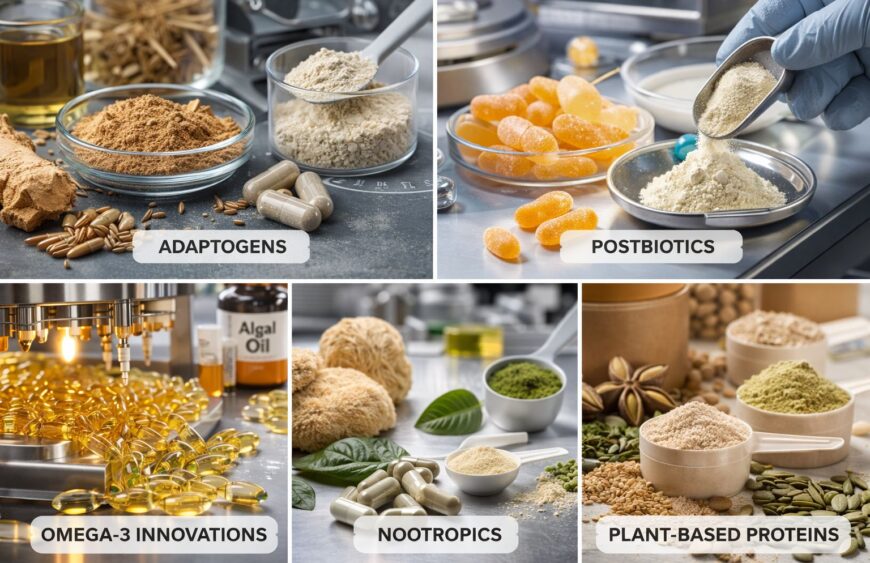
The nutraceutical landscape is constantly evolving, driven by new scientific research and a sophisticated consumer base that demands more from their supplements. While foundational support like Vitamin C and D, no doubt remains crucial, but the industry is moving into advanced formulations that target systemic wellness, mental resilience, and advanced gut health.
For brands leveraging nutraceutical third-party manufacturing, staying ahead of these trends is essential to developing market-leading products in 2025.
Here are the top five ingredients redefining the industry, moving beyond simple immunity support into a new era of holistic wellness.
- Adaptogens: The Stress Resilience Revolution
Chronic stress has become a universal health concern. Consumers are seeking natural ways to manage cortisol levels and improve their resilience to daily pressures. This has fueled the surge of adaptogens—natural substances known to help the body “adapt” to physical and emotional stressors.
Why they are trending:
- Holistic Stress Management: Unlike sedatives, adaptogens help balance the endocrine system over time.
- Key Players for 2025: Ashwagandha continues its dominance for anxiety relief and hormonal balance. Rhodiola Rosea is gaining traction for energy and mental clarity without the jitters associated with caffeine.
Manufacturing Insight: Brands are looking for high-potency, standardized extracts to ensure efficacy and consistency in capsules, powders, and functional beverages.
- Postbiotics: The Next Frontier in Gut Health
The gut health movement is mature, but the science is still rapidly advancing. Consumers are familiar with probiotics (live bacteria) and prebiotics (fiber that feeds them). The next big wave is postbiotics.
Postbiotics are the beneficial bioactive compounds (like short-chain fatty acids) produced by bacteria when they ferment prebiotics in the gut. They offer the benefits of a healthy microbiome without introducing live organisms, offering superior stability and targeted effects.
Why they are trending:
- Stability and Shelf Life: Postbiotics are non-living, making them much easier for third-party manufacturers to formulate into stable gummies, powders, and capsules without refrigeration concerns.
- Targeted Benefits: Research highlights specific postbiotics for immune modulation, digestive comfort, and anti-inflammatory properties.
Manufacturing Insight: This ingredient is ideal for brands seeking innovative, shelf-stable digestive health products that differentiate themselves from the crowded probiotic market.
- Omega-3 Fatty Acids (Advanced Delivery Systems)
Omega-3s (EPA and DHA) are foundational for brain, heart, and joint health. They are far from a new ingredient, but they are trending again due to major innovations in how they are delivered.
Consumers are increasingly aware of the quality, source, and absorbability of their Omega-3s, moving past traditional, often-burp-inducing fish oil softgels.
Why they are trending:
- Algal Oil Sources: A massive shift towards sustainable, vegan-friendly algal oil addresses ethical and environmental concerns.
- Improved Absorption: Emulsified oils and liposomal delivery systems are becoming standard requirements, promising 3x-5x better bioavailability.
- No Fishy Burps: Manufacturers are mastering enhanced refinement and encapsulation techniques to eliminate common consumer complaints.
Manufacturing Insight: Third-party manufacturers need expertise in advanced encapsulation techniques and securing sustainable, high-quality sourcing to meet this renewed demand.
- Nootropics and Cognitive Enhancers
The demand for “brain health” supplements has skyrocketed as people seek improved focus, memory, and productivity in a demanding world. This category of ingredients is known as nootropics.
While caffeine is a simple nootropic, 2025 trends focus on integrated, sustainable cognitive support that avoids stimulant dependency.
Key Players for 2025:
- Lion’s Mane Mushroom: This functional mushroom is popular for supporting nerve growth factor (NGF) production and long-term cognitive health.
- L-Theanine: Often paired with caffeine, this amino acid found in green tea provides calm focus and smooth energy without the crash, making it a staple in “focus stack” formulations.
Manufacturing Insight: These ingredients are often formulated into complex powder blends for shakes or “biohacking” stacks, requiring precision blending capabilities from contract manufacturers.
- Sustainable, Plant-Based Proteins (Next Gen)
The plant-based revolution continues to accelerate. Consumers are looking beyond basic pea and soy proteins, demanding better taste, texture, and complete amino acid profiles.
Why they are trending:
- Novel Sources: Ingredients like sacha inchi protein, hemp protein, and blends using pumpkin seed protein offer diverse nutritional profiles and improved texture.
- Sustainability Story: Brands are prioritizing ingredients with clear sustainability narratives and transparent sourcing, appealing to environmentally conscious shoppers.
Manufacturing Insight: The challenge for third-party manufacturers is managing the flavor profiles of these diverse protein sources and creating smooth, palatable final powder products that rival traditional whey.
Partnering for the Future
The nutraceutical market of 2025 is sophisticated and specialized. Success hinges on moving beyond basic vitamins and leveraging these trending, science-backed ingredients.
By partnering with an agile and innovative nutraceutical third-party manufacturer that has expertise in sourcing, formulating, and producing these advanced compounds, wellness brands can efficiently bring the next generation of holistic health products to market.