
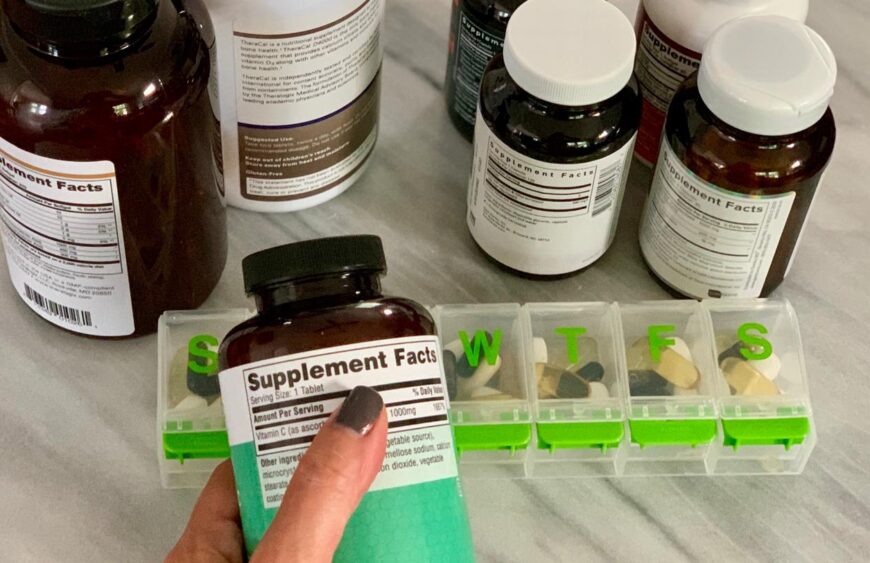
The demand for health supplements in India is skyrocketing, promising everything from better immunity to sharper focus. But as the market floods with options—both local and imported—how do you really know if the product in your hand is safe, effective, and legally compliant?
The answer is found not in the flashy marketing claims, but in the fine print on the label.
Navigating a nutraceutical label can feel like reading a foreign language. This guide will empower you, the Indian consumer, to cut through the confusion using clear [FSSAI labeling guidelines 2025]. By the end of this read, you’ll know exactly how to determine if a supplement is a legitimate, safe choice for your health journey.
- The Mandatory FSSAI “Must-Haves”
These are the non-negotiable legal requirements that instantly tell you if a product is legitimate for sale in India. If any of these are missing, put the bottle back on the shelf.
- The FSSAI License Number (14 Digits)
Every single food product—including nutraceuticals—manufactured or imported for sale in India must display a 14-digit FSSAI License or Registration number.
- How to spot it: It typically starts with 1 or 2 (e.g., 10012345678901).
- Your Action: A genuine manufacturer makes this easy to find. If you want an extra layer of confidence, you can plug this number into the official FoSCoS portal to verify its validity and the manufacturer’s details.
- The “Not for Medicinal Use” Disclaimer
This is perhaps the most critical distinction for an [Indian consumer health] perspective. In India, nutraceuticals are regulated as a category of food, not as drugs.
- How to spot it: The phrase “NOT FOR MEDICINAL USE” or “FOR MEDICAL USE ONLY” must be prominently displayed, often in all caps within a box.
- Your Action: This disclaimer legally prevents companies from claiming their supplement can cure or treat a disease. If a label makes bold claims about treating diabetes or high blood pressure and has this disclaimer, the claims are likely misleading and violate [FSSAI guidelines].
- Mandatory Logos and Symbols
Check for these visual cues for immediate identification:
- The FSSAI Logo: A circular logo that confirms the manufacturer adheres to basic safety standards.
- Vegetarian/Non-Vegetarian Marks: A green circle within a square indicates a vegetarian product. A brown circle indicates non-vegetarian ingredients (often found in fish oil or gelatin capsules).
- Decoding the Ingredients List and Nutrition Facts
Once you know the product is legally compliant, it’s time to understand what you are putting into your body.
- The “Ingredients” Section: A Matter of Weight
The ingredients list is more than just a list of items. It follows a specific FSSAI rule: ingredients must be listed in descending order of their weight or volume.
- Your Action: The ingredient listed first is the most abundant in the product. If you are buying a Curcumin supplement, “Curcumin Extract” should ideally be the first or second ingredient, not near the bottom of a long list of fillers. Look for clear labeling of specific botanicals and permitted additives.
- The “Nutrition Information” Panel: Serving Size is Key
The values listed on this panel (Vitamins A, B12, Zinc, etc.) are only relevant to the stated serving size.
- Your Action: Pay close attention to the Serving Size (e.g., “Two capsules”) and Servings Per Container (e.g., “30 servings”). Don’t assume the listed nutrient value is for the whole bottle or just one pill if the serving size is two. This prevents accidental under- or over-dosing.
III. Understanding Health Claims and Safety Warnings
FSSAI has strict rules about what a company can say a supplement does.
- Permissible vs. Prohibited Claims
- Permissible Claims (General Health): These are broad and backed by general scientific consensus (e.g., “Calcium supports strong bones,” or “Helps improve digestive health”).
- Prohibited Claims (Disease Treatment): The product cannot claim to “lower cholesterol” in a treatment capacity or “cure arthritis.”
- Your Action: Be a skeptical consumer. If a claim sounds too good to be true, it likely violates [FSSAI regulations nutraceuticals].
- Storage and Warning Statements
Safety information protects vulnerable populations.
- Your Action: Always read warnings for children, pregnant/lactating women, or individuals with pre-existing medical conditions (like liver or kidney issues). Store the product as directed (usually in a cool, dry place) to maintain potency and safety.
- Conclusion: Transparency Equals Safety
Reading a supplement label in India is your first line of defense in making [safe supplement choices]. A label that is clearly laid out, transparent with its ingredients, and proudly displays its FSSAI compliance details indicates a manufacturer who prioritizes consumer safety and regulatory compliance over quick sales.
As a leading [FSSAI approved manufacturer] and [GMP certified nutraceutical facility], our partners rely on us to ensure every product leaving our facility adheres to the stringent 2025 guidelines. We believe a transparent label gives you, the consumer, peace of mind and confidence in your wellness journey.